Welcome, Guest
You have to register before you can post on our site.

Username
  

Password


Search Forums

(Advanced Search)

Forum Statistics
» Members: 10,573
» Latest member: DevilForce
» Forum threads: 4,344
» Forum posts: 21,363

Full Statistics

Online Users
There are currently 174 online users.
» 0 Member(s) | 155 Guest(s)
Amazonbot, Applebot, Bing, Bytespider, Crawl, PetalBot, Semrush, bot

Latest Threads
Automatic Modbus Sensor p...
Forum: "KCS" v3 firmware
Last Post: PrivatePerson
56 minutes ago
» Replies: 5
» Views: 145
How is energy value deter...
Forum: N60
Last Post: marekd1
2 hours ago
» Replies: 0
» Views: 7
KC868-A8v3 ESPHome yaml f...
Forum: KC868-A8v3
Last Post: admin
Today, 03:04 AM
» Replies: 0
» Views: 25
[arduino code examples fo...
Forum: KC868-A8v3
Last Post: admin
Today, 02:58 AM
» Replies: 0
» Views: 19
[arduino code examples fo...
Forum: KC868-A8v3
Last Post: admin
Today, 02:54 AM
» Replies: 0
» Views: 15
N20 energy
Forum: N20
Last Post: admin
Today, 12:30 AM
» Replies: 3
» Views: 56
ds3231 added to esphome, ...
Forum: KC868-A16v3
Last Post: admin
Yesterday, 01:28 PM
» Replies: 1
» Views: 39
KCS debounce option for K...
Forum: KC868-A16
Last Post: admin
Yesterday, 01:24 PM
» Replies: 3
» Views: 81
HAv2 + ESPHome - Avoiding...
Forum: KC868-HA /HA v2
Last Post: admin
Yesterday, 05:03 AM
» Replies: 4
» Views: 122
Does KCS v3 on CO16 opera...
Forum: CO16
Last Post: admin
11-18-2026, 11:33 PM
» Replies: 1
» Views: 36

  [arduino code examples for F24]-01 Turn ON/OFF relay by PCF8575 chip
Posted by: admin - 11-28-2024, 11:40 AM - Forum: F24 - No Replies

Code:
/*
* Made by KinCony IoT: https://www.kincony.com
*
* This program controls a 24-channel relay board via two PCF8575 I/O expanders.
* It sequentially turns on each relay and then turns them off in a loop.
*
* Pin Definitions:
* - SDA: GPIO 8
* - SCL: GPIO 18
*
* Delay Time:
* - 200 milliseconds between switching relays
*/

#include <Wire.h>        // Include the Wire library for I2C communication
#include <PCF8575.h>     // Include the PCF8575 library to control the I/O expander

#define SDA 8            // Define the SDA pin
#define SCL 18           // Define the SCL pin
#define DELAY_TIME 200   // Define the delay time in milliseconds

// Set I2C addresses of the PCF8575 modules
#define I2C_ADDRESS_R1 0x25 // I2C address of the first PCF8575 module
#define I2C_ADDRESS_R2 0x26 // I2C address of the second PCF8575 module

PCF8575 pcf8575_R1(I2C_ADDRESS_R1); // Create a PCF8575 object for the first module (for relays 9-24)
PCF8575 pcf8575_R2(I2C_ADDRESS_R2); // Create a PCF8575 object for the second module (for relays 1-8)

void setup() {
  // Initialize I2C communication
  Wire.begin(SDA, SCL); // SDA on GPIO 8, SCL on GPIO 18 (according to your board's configuration)
 
  // Initialize serial communication for debugging (optional)
  Serial.begin(115200);
  Serial.println("PCF8575 Relay Control: Starting...");

  // Initialize the PCF8575 modules
  pcf8575_R1.begin();
  pcf8575_R2.begin();

  // Turn off all relays initially (set all pins HIGH)
  for (int i = 0; i < 16; i++) {
    pcf8575_R1.write(i, HIGH); // Set relays 9-24 to OFF (assuming HIGH means OFF for relays)
    pcf8575_R2.write(i, HIGH); // Set relays 1-8 to OFF (assuming HIGH means OFF for relays)
  }
}

void loop() {
  // Sequentially turn on each relay (1-24)
 
  // First control the relays on the second PCF8575 (relays 1-8, corresponding to pins 8-15)
  for (int i = 8; i < 16; i++) {
    pcf8575_R2.write(i, LOW);   // Turn on the relay at pin i (LOW means ON for the relay)
    delay(DELAY_TIME);          // Wait for DELAY_TIME milliseconds
  }

  // Then control the relays on the first PCF8575 (relays 9-24)
  for (int i = 0; i < 16; i++) {
    pcf8575_R1.write(i, LOW);   // Turn on the relay at pin i (LOW means ON for the relay)
    delay(DELAY_TIME);          // Wait for DELAY_TIME milliseconds
  }

  // Sequentially turn off each relay (1-24)
 
  // First control the relays on the second PCF8575 (relays 1-8, corresponding to pins 8-15)
  for (int i = 8; i < 16; i++) {
    pcf8575_R2.write(i, HIGH);  // Turn off the relay at pin i (HIGH means OFF for the relay)
    delay(DELAY_TIME);          // Wait for DELAY_TIME milliseconds
  }

  // Then control the relays on the first PCF8575 (relays 9-24)
  for (int i = 0; i < 16; i++) {
    pcf8575_R1.write(i, HIGH);  // Turn off the relay at pin i (HIGH means OFF for the relay)
    delay(DELAY_TIME);          // Wait for DELAY_TIME milliseconds
  }
}
arduino ino file download:

.zip   1-relay.zip (Size: 1.03 KB / Downloads: 784)

Print this item

  F24 ESP32-S3 IO pins define
Posted by: admin - 11-28-2024, 11:39 AM - Forum: F24 - Replies (2)

ANALOG_A1(0-5v)    GPIO5
ANALOG_A2(0-5v)    GPIO7
ANALOG_A3(4-20mA)  GPIO6
ANALOG_A4(4-20mA)  GPIO4

IIC SDA:GPIO8
IIC SCL:GPIO18

PCF8575/XL9555:U27 (relay9-24) i2c address: 0x25
PCF8575/XL9555:U23 (DI1-16) i2c address: 0x24
PCF8575/XL9555:U49 i2c address:  0x26
  PCF8575/XL9555(pin number0-7) : DI17-24
  PCF8575/XL9555(pin number8-11) :relay5-8
  PCF8575/XL9555(pin number12-15) :relay1-4

Note: after 2026-11-01 KinCony begin use XL9555 i2c extend chip. you can use KCS v3 "SYSTEM" webpage to scan device show the model or config by ESPHome to scan i2c bus, will find the chip model.


if config by ESPHome:

relay1: pcf8575(U49) number:12
relay2: pcf8575(U49) number:13
relay3: pcf8575(U49) number:14
relay4: pcf8575(U49) number:15
relay5: pcf8575(U49) number:8
relay6: pcf8575(U49) number:9
relay7: pcf8575(U49) number:10
relay8: pcf8575(U49) number:11

RF433MHz wireless receiver: GPIO40
------------------------

Ethernet (W5500) I/O define:

clk_pin: GPIO42
mosi_pin: GPIO43
miso_pin: GPIO44
cs_pin: GPIO41

interrupt_pin: GPIO2
reset_pin: GPIO1

--------------------
RS485:
RXD:GPIO17
TXD:GPIO16
--------------------
Tuya module:
RXD:GPIO38
TXD:GPIO39

Tuya network button: Tuya module's P28
Tuya network LED: Tuya module's P16

---------------------
1-wire (pull-up resistance on PCB):
1-wire1:GPIO48
1-wire2:GPIO47
1-wire3:GPIO21
1-wire4:GPIO15

1-wire (without resistance on PCB):
1-wire1:GPIO13
1-wire2:GPIO14
------------------------
SD Card:
SPI-MOSI:GPIO10
SPI-SCK:GPIO11
SPI-MISO:GPIO12
SPI-CS:GPIO9
------------------------
24C02 EPROM i2c address: 0x50
DS3231 RTC i2c address: 0x68
SSD1306 display: i2c address:0x3c

Print this item

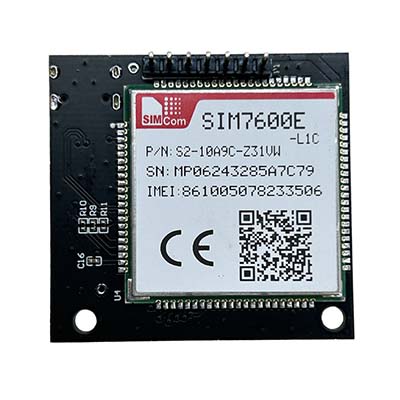
  KinCony SIM7600E-L1C 4G breakout LTE core module released
Posted by: admin - 11-28-2024, 11:33 AM - Forum: News - No Replies

The SIM7600E-L1C is a versatile and cost-effective 4G LTE module that integrates multiple communication functionalities, making it suitable for a wide range of IoT and M2M applications. Developed by KinCony, this module provides robust connectivity and high-speed data transmission capabilities, ensuring seamless integration into IoT ecosystems.
[Image: sim7600-1_pix400.jpg][Image: sim7600-2_pix400.jpg]
[Image: sim7600-key-parts.png]
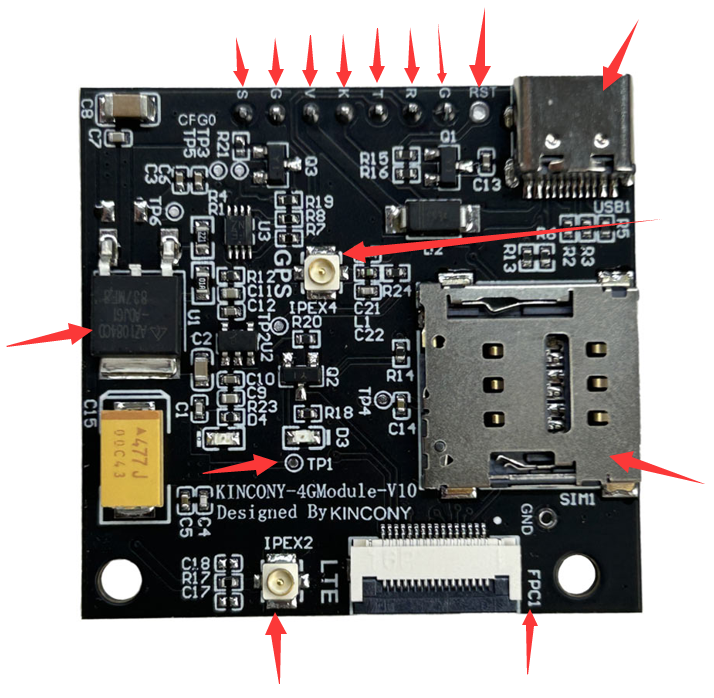
USB-C: connect with SIM7600E's USB port , debug by AT command
pin-S (SLEEP): set module to SLEEP mode
pin-G (GROUND): GND
pin-V (VCC): power supply DC 5-10V
pin-K (KEY): power on/off module
pin-T (TXD): send data
pin-R (RXD): receive data
pin-G (GROUND): GND
pin-RST: SIM7600 chip RESET pin
power chip: AZ1084CD
IPEX2: 4G antenna
IPEX4: GPS antenna
SIM card: Drawer SIM card holder (NANO)
TP1: DC4V power test point
SIM7600 network LED indicator: if blink means network registration successful
1: LED always ON: Searching network/call connect
2: LED 200ms ON, 200ms OFF: Data transmit
3: LED 800ms ON, 800ms OFF: Registered network
4: LED OFF: power off/Sleep
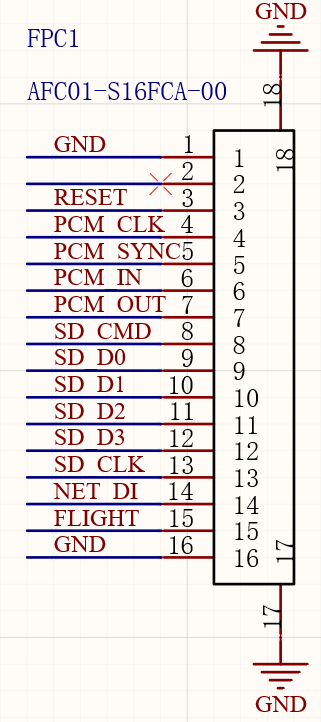
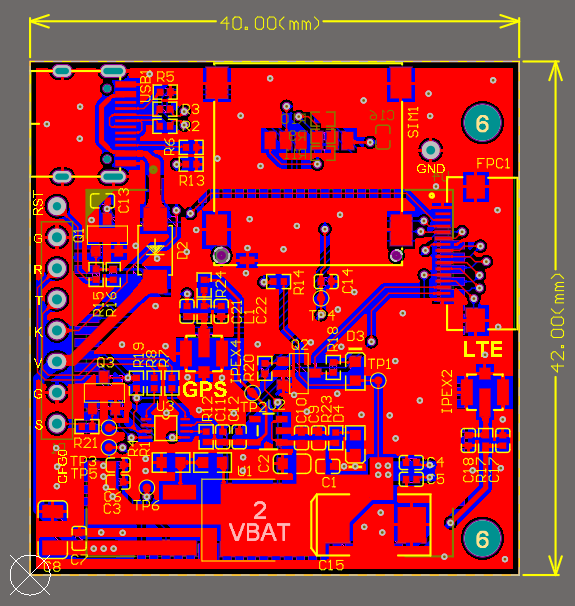
FPC1(16 pins) extender pins define:
[Image: sim7600-fpc.png]
[Image: sim7600-pcb.png]

Print this item

  GPIO Connector
Posted by: williemcvillage - 11-28-2024, 09:14 AM - Forum: KC868-AM - Replies (2)

Hi, I recently bought this board KC868-AM, and I want to use the free GPIOs onboard. 

Can you recommend a connector to soldier on the board? Maybe an aliexpress link?

Thanks

Print this item

  Configure presence sensor settings in ESPHome
Posted by: johnsmith8439 - 11-28-2024, 04:25 AM - Forum: KC868-A16 - Replies (5)

Hello, can I configure settings for your presence sensor in esphome:
https://www.aliexpress.com/item/1005006030673158.html
Or should I configure using remote?
Also, which presence sensor component does it use? LD2410? Thank you.

Print this item

Information IR Receiver Compatibility with KC868-A6 and KC868-A16
Posted by: BHD-13 - 11-28-2024, 12:05 AM - Forum: KC868-A series and Uair Smart Controller - Replies (1)

Hi Admin,
I came across your lesson about ''How to decode IR signal by ESPHome'' which i found extremely helpful and straightforward.
https://www.kincony.com/forum/showthread.php?tid=1220

I want to know whether it is possible to use an IR receiver like the VS1838B on the KC868-A6 or the KC868-16 and if possible, how to wire it.
[Image: Sf60acd7594324052b198ef4d9593c41fS.jpg_1....jpg_.webp]

Print this item

Information IR Receiver Compatibility with KC868-A6 and KC868-A16
Posted by: BHD-13 - 11-27-2024, 11:52 PM - Forum: KC868-A series and Uair Smart Controller - Replies (1)

Hi Admin,
I came across your lesson about ''How to decode IR signal by ESPHome'' which i found extremely helpful and straightforward.
https://www.kincony.com/forum/showthread.php?tid=1220

I want to know whether it is possible to use an IR receiver like the VS1838B on the KC868-A6 or the KC868-16 and if possible, how to wire it.
[Image: Sf60acd7594324052b198ef4d9593c41fS.jpg_1....jpg_.webp]

Print this item

  Suitable CT clamps for M30
Posted by: sumnerboy - 11-27-2024, 08:33 PM - Forum: KC868-M16 / M1 / MB / M30 - Replies (23)

Hi,

I am very interested in getting an M30 for monitoring the various circuits in my home. Some circuits only draw a 1-2A, some 8-10A, some 20-24A.

Can you please provide a list of suitable CT clamps that will work with the M30 for a various range of currents?

Ideally model numbers and specifications so we can source them directly if required.

Many thanks,
Ben

Print this item

  KC868-A4S for heating controll
Posted by: tadam - 11-27-2024, 01:05 PM - Forum: KC868-A4S - Replies (9)

Hello there,

I am looking for confirmation before purchase that I can use this board as I plannig to. Smile
So my plan is to use this board for central heating management. I attached a picture how does the setup looks so far.
I will use Home assistant and esphome.
As you can see I have 
- 4 24V AC valve.
- 5 temperature sensor (ds18B20)
- analog pressure sensor (SEN0257)
- leak sensor (just a basic contact sensor)
- opentherm adapter (this one)
- for network connection I will use ethernet

Do I need an additonal power supply (9-24V DC) to power my board? Or it can be power from 5V?

4x 24V AC valve: This is easy, They can go to the 4 relay. I think I will use the normaly closed terminals, in case of a board issue, the heating should not be affected. There is a separate 24V AC power supply, which only responsible for powering these valves.

5 temperature sensor (ds18B20): As far as I know these sensors has uniq id and can use the same pin, with one wire protocol. I can use the 3.3V output and ground from the board, and GPIO01 for the onewire.

analog pressure sensor (SEN0257): This sensor needs 5V can I get 5V out of this board? The output of this sensor is analog, so I can use AI1 for that.

leak sensor: This is just a digital sensor this is trivial too, it can go DI1 and ground.

opentherm adapter: This board need 3.3V, this I can get from the board. But also needs 2 free IO. Is there an IO I can repurpose in this case? There is only one free "bare" gpio left which is this case GPIO2. All other looks like has a special purpose.

I am really excited for this project and looking forward for responses. Thanks in advance.


Attached Files Thumbnail(s)
   
Print this item

  Drawning 2D/3D
Posted by: Belfaso - 11-27-2024, 12:18 PM - Forum: KC868-A16 - Replies (2)

Are there any other drawings availiable beside schematics? I looking for board dimensions, hole locations.

Print this item